At Legaldocs Advisor, we understand the importance of document attestation for Indian nationals. Document attestation is a process of verifying the authenticity of a document so that it can be recognized by the concerned authorities in a foreign country. This process can be time-consuming and cumbersome, especially if you are not aware of the procedures and requirements. In this article, we will provide you with a comprehensive guide on how Indian nationals can get their documents attested easily.

Step 1: Understand the Requirements

The first step in getting your documents attested is to understand the requirements. Each country has its own set of rules and regulations for document attestation. For instance, if you are planning to migrate to the UAE, you will need to get your documents attested by the Ministry of External Affairs (MEA) and then by the UAE embassy in India. On the other hand, if you are planning to migrate to the US, you will need to get your documents attested by the MEA and then by the US consulate in India.

Step 2: Gather the Required Documents

Once you have understood the requirements, the next step is to gather the required documents. The documents that need to be attested may vary depending on the country you are planning to migrate to. However, some of the commonly attested documents include educational certificates, marriage certificates, birth certificates, and police clearance certificates.

Step 3: Get Your Documents Attested

After you have gathered the required documents, the next step is to get them attested. There are different authorities that can attest your documents, such as the MEA, State Home Department, Notary, and Chamber of Commerce. Depending on the country you are planning to migrate to, you may need to get your documents attested by multiple authorities.

Step 4: Submit Your Documents

Once your documents have been attested, the final step is to submit them to the concerned authorities in the country you are planning to migrate to. It is important to note that the attestation process can take some time, so it is recommended to start the process well in advance.

Conclusion:

Getting your documents attested can be a complex and time-consuming process. However, with the right guidance and understanding of the requirements, it can be made easier. At Legaldocs Advisor, we provide expert guidance and assistance in getting your documents attested. We understand the importance of your documents and the role they play in your life. Our team of experts ensures that your documents are attested as per the requirements and in a timely manner. Contact us today to know more about our document attestation services.

Continue ReadingHow can Indian nationals get documents attested easily

Introduction

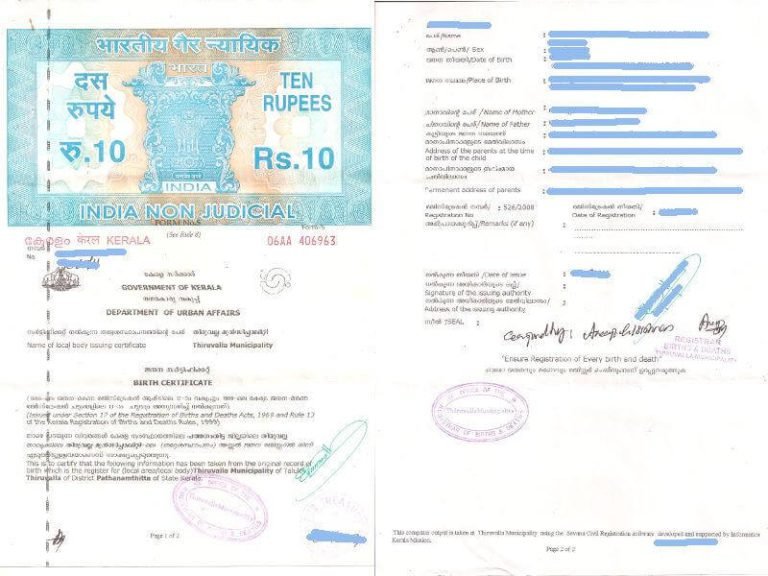
Obtaining a non-availability of birth certificate (NABC) is a legal requirement in situations where an individual’s birth certificate is either lost, damaged, or not available. This document serves as proof of the non-availability of the original birth certificate and is required in various official and legal procedures. In this article, we will provide you with a comprehensive guide on how to obtain a non-availability of birth certificate in India.

Understanding Non-Availability of Birth Certificate

A non-availability of birth certificate is a legal document that proves that an individual’s original birth certificate is not available. It is a requirement in various situations, such as applying for a passport, admission to educational institutions, and obtaining a government job. The process of obtaining a non-availability of birth certificate varies from state to state in India, and the guidelines for applying for it are provided by the respective State Government authorities.

Step-by-Step Guide to Obtain Non-Availability of Birth Certificate

Step 1: Visit the official website of the respective State Government authority responsible for issuing the non-availability of birth certificate.

Step 2: Look for the option to apply for a non-availability of birth certificate and fill in the required details.

Step 3: Upload any supporting documents that may be required, such as an affidavit, a copy of the ration card, or a copy of the voter ID card.

Step 4: Pay the application fee, if any, using the available payment options.

Step 5: Submit the application, and you will receive an acknowledgement receipt with a unique application number.

Step 6: After verification of the submitted application, you will receive the non-availability of birth certificate.

Documents Required for Non-Availability of Birth Certificate

The documents required for obtaining a non-availability of birth certificate may vary from state to state, but some of the common documents required are:

  1. Affidavit stating the reason for non-availability of birth certificate
  2. Copy of ration card
  3. Copy of voter ID card
  4. Copy of Aadhar card
  5. Copy of school leaving certificate
  6. Copy of hospital discharge certificate
  7. Copy of any other relevant document that proves your identity and age.

Conclusion

In conclusion, obtaining a non-availability of birth certificate is a crucial process that serves as proof of an individual’s birth details when the original birth certificate is not available. The process for obtaining a non-availability of birth certificate varies from state to state in India, and it is essential to follow the guidelines provided by the respective State Government authorities. We hope this comprehensive guide has provided you with all the necessary information on how to obtain a non-availability of birth certificate in India.

Continue ReadingNon availability birth certificate everything you need to know

What is an MEA Apostille?

MEA Apostille is a stamp or certificate issued by the Ministry of External Affairs (MEA) in India. It is a type of authentication that is used to verify the authenticity of official documents issued by the Indian government. An MEA Apostille ensures that a document is legally recognized in a foreign country that is a member of the Hague Convention.

The Hague Convention is an international treaty that governs the recognition of legal documents across borders. It was established in 1961 and currently has over 100 member countries. The purpose of the Hague Convention is to simplify the legalization of documents for use in foreign countries.

Uses of an MEA Apostille

MEA Apostille is used for various purposes, including:

  1. Education: An MEA Apostille is required for students who wish to study abroad. It is used to verify the authenticity of educational documents, such as transcripts and degrees.

  2. Employment: An MEA Apostille is often required for job seekers who wish to work in a foreign country. It is used to verify the authenticity of employment-related documents, such as experience certificates and police clearance certificates.

  3. Business: An MEA Apostille is also required for businesses that wish to operate in a foreign country. It is used to verify the authenticity of legal documents, such as registration certificates and licenses.

MEA Apostille Process

The MEA Apostille process involves several steps, including:

  1. Document Verification: The document must be verified by the relevant authority in India, such as the HRD or Home Department.

  2. MEA Authentication: The document is then sent to the MEA for authentication.

  3. Apostille Stamp: The MEA will affix an apostille stamp to the document to verify its authenticity.

  4. Final Verification: The document is then verified by the Embassy or Consulate of the country where it will be used.

Conclusion

In conclusion, an MEA Apostille is an essential document for anyone who wishes to use official Indian documents in a foreign country that is a member of the Hague Convention. It is used to verify the authenticity of documents related to education, employment, and business. The MEA Apostille process involves several steps, including document verification, MEA authentication, apostille stamp, and final verification.

If you require more information or assistance with obtaining an MEA Apostille, please consult with a qualified legal professional or contact the Ministry of External Affairs directly.

Continue ReadingWhat is an MEA Apostille & What are the uses of an MEA Apostille?